Research Design Principles
Stat-Signal applies hypothesis driven research designs with clearly defined signals, controls, and measurable outcomes to ensure statistical validity and interpretability. It emphasizes reproducibility and robustness through pre specified models, adequate sample sizing, and rigorous validation to mitigate noise and bias.
Stat-Signal's research methodology is applied across global, regional, and country-level studies. Primary research coverage spans mature, emerging, and frontier markets, with geographic scope defined at the outset of each study to ensure representative sampling, regional comparability, and contextual accuracy.
1. Primary Research First
Primary market research is the backbone of the Stat-Signal methodology. Direct data collection from real market participants ensures originality, relevance, and contextual depth.
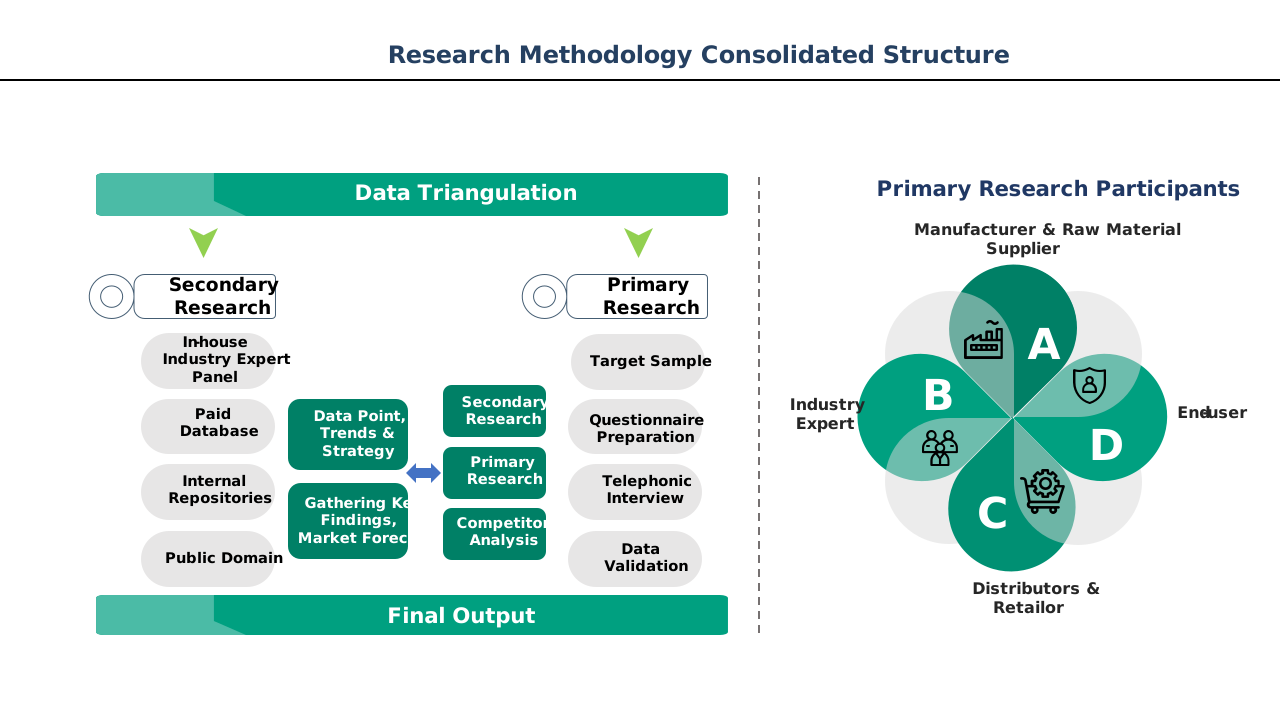
Primary data is collected through structured interviews, surveys, and expert discussions with industry participants, including manufacturers, distributors, service providers, and domain specialists, supported selectively by validated secondary sources for contextual benchmarking.
2. Triangulated Validation
Findings are validated through multiple primary inputs and selectively supported by secondary intelligence only for context, benchmarking, and hypothesis refinement.
3. Modular by Offering Type
Research is designed to distinctly address Product, Service, and Solution contexts while using a unified process backbone.
4. Signal Detection Orientation
Beyond stated needs, the methodology focuses on detecting weak signals, unmet needs, behavioral contradictions, and emerging patterns.
Stat-Signal Research Phases
The Stat-Signal research phases follows a structured and transparent workflow designed to convert complex data into clear, decision-ready insights. It begins with a precise understanding of client objectives, followed by systematic data collection from validated sources, rigorous analysis using statistically sound models, and multi-level validation to ensure accuracy and relevance. Each phase is carefully documented and reviewed, enabling consistent quality, traceability, and insights that support confident strategic and operational decisions.
Phase 1: Problem Framing and Alignment
- Define the business problem and research objectives
- Align stakeholders on scope, success metrics, and usage of insights
- Stakeholder discovery workshops
- Business context immersion
- Hypothesis and assumption mapping
- Research charter
- Key decisions to be supported
- Initial hypothesis set
- Engagement Lead facilitates alignment
- Research Lead translates business questions into researchable objectives
- Domain Analysts provide industry context
Phase 2: Market Mapping and Segmentation
- Identify relevant market universe
- Define customer, user, buyer, and influencer segments
- Primary expert interviews
- Customer ecosystem mapping
- Value chain and stakeholder analysis
- Market and segment definitions
- Priority target profiles
- Analysts conduct exploratory interviews
- Research Lead validates segmentation logic
Phase 3: Research Architecture Design
- Design primary research instruments tailored to Product, Service, and Solution contexts
- Selection of qualitative and quantitative techniques
- Respondent profile finalization
- Sampling and recruitment strategy
- Research design document
- Discussion guides and instruments
- Research Lead designs methodology
- Analysts build tools and scripts
- Quality Lead reviews for bias and rigor
| Product Focus | Service Focus | Solution Focus |
|---|---|---|
| Feature usage, adoption drivers, price sensitivity | Experience journeys, service gaps, delivery expectations | Problem severity, outcome orientation, integration complexity |
Phase 4: Primary Data Collection
- Capture deep, unbiased, and high quality primary data
- In depth interviews
- Focus groups or expert panels
- Surveys and structured questionnaires
- Ethnographic or contextual inquiry where applicable
- Interview transcripts and recordings
- Raw survey datasets
- Trained interviewers conduct fieldwork
- Engagement Lead monitors progress
- Quality Lead ensures data integrity
Phase 5: Data Synthesis and Insight Generation
Collected data is standardized, normalized, and structured prior to analysis to ensure consistency across respondent types, geographies, and research instruments. Quantitative and qualitative inputs are processed using defined analytical frameworks to preserve signal integrity and minimize distortion.
- Convert raw data into meaningful insights and signals
- Signal Analysis and pattern recognition
- Cross segment comparison
- Quantification of qualitative insights
- Insight themes
- Opportunity areas
- Risk and barrier analysis
- Analysts perform synthesis
- Research Lead validates interpretations
- Internal peer review sessions
Phase 6: Opportunity Modeling and Validation
Model outputs and opportunity estimates are validated through cross-respondent comparison and benchmarked against historical patterns, industry baselines, and expert feedback where applicable.
- Translate insights into strategic options for Product, Service, and Solution
- Opportunity sizing using primary inputs
- Concept testing with target respondents
- Trade off and prioritization exercises
- Ranked opportunity list
- Concept validation results
- Cross functional research pods collaborate
- Client stakeholders engaged for validation
Phase 7: Strategic Implications and Recommendations
- Provide clear, actionable, and defensible recommendations
- Strategy alignment workshops
- Scenario implications analysis
- Roadmap linkage
- Strategic recommendations
- Product, Service, or Solution playbooks
- Engagement Lead leads recommendation framing
- Research Lead ensures evidence linkage
Phase 8: Reporting and Activation
- Enable decision making and execution
- Insight storytelling
- Executive presentations
- Activation workshops
- Final research report
- Executive summary
- Activation toolkit
- Entire team participates in storytelling
- Senior reviewers ensure clarity and impact
Phase 9: Governance and Quality Assurance
Stat-Signal maintains strong governance and quality assurance through clearly defined oversight structures, standardized research protocols, and documented decision processes. Regular reviews, internal audits, and version-controlled methodologies are used to ensure methodological integrity, regulatory alignment, and consistent research quality across all studies. All published research follows Stat-Signal's editorial standards governing data review, validation, and presentation.
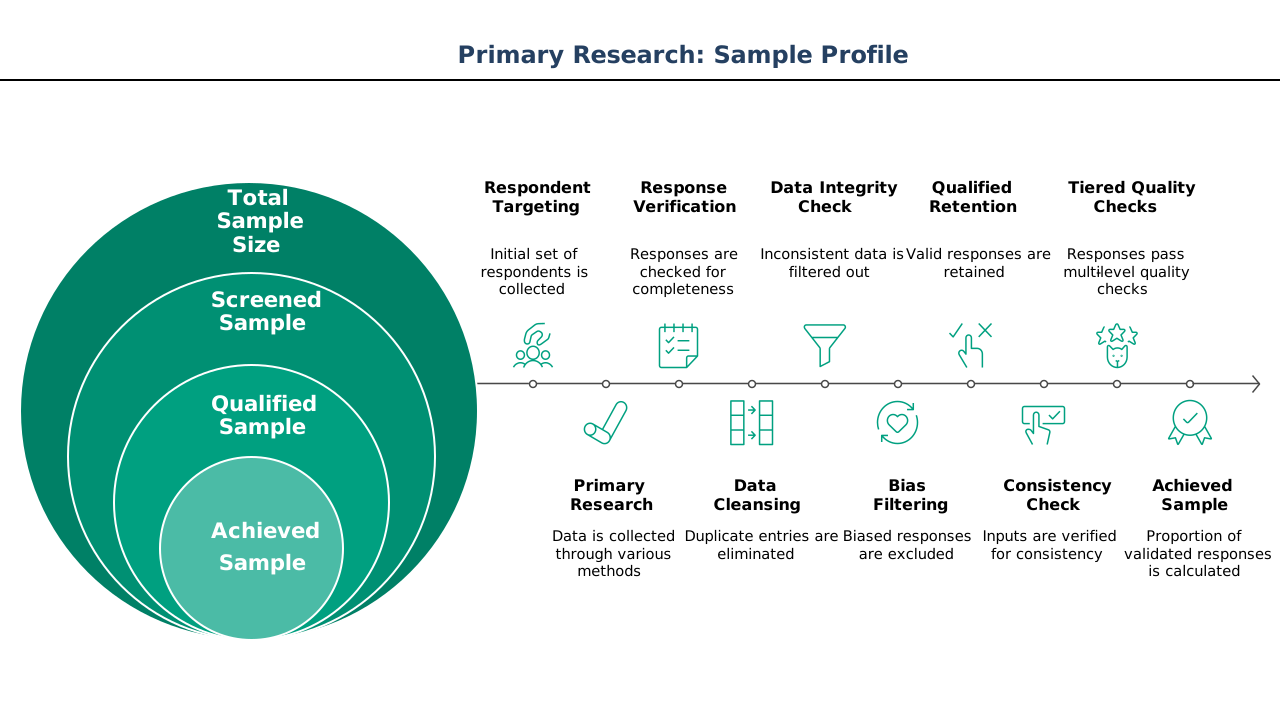
Data quality control is enforced through respondent verification, consistency checks across inputs, cross-phase validation, and internal peer review. Quality gates are applied before analysis, before reporting, and prior to publication to reduce bias, sampling errors, and interpretation drift.
Methodological consistency is maintained across studies through standardized instruments, version-controlled frameworks, and documented assumptions, enabling comparability across markets and time periods.
- Built in quality gates at each phase
- Bias checks and respondent validation
- Ethical and confidentiality compliance
Phase 10: Delivering Decision Ready Intelligence
- Deliver end to end, primary research driven intelligence that supports confident decisions across Product, Service, and Solution strategies while maintaining speed, rigor, and originality
- Post project learning is embedded to refine tools, probes, and frameworks. Insights contribute to the evolving Stat-Signal proprietary knowledge base, strengthening future research engagements.
- Learnings from completed studies are reviewed periodically to refine research instruments, validation checkpoints, and analytical frameworks, ensuring continuous methodological improvement.